
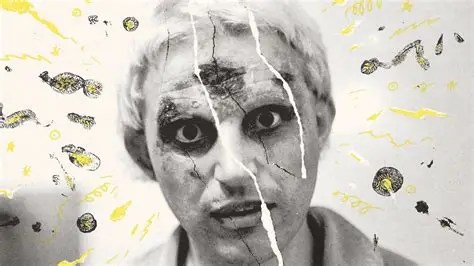
Any appropriate representation of Chris Knox runs the risk of devolving into a string of superlatives. So let’s devolve. Born and raised in New Zealand’s southwesternmost city of Invercargill, Knox migrated to Dunedin for university in 1970, dropped out within a year, and essentially fumbled about the college town experimenting with sex, drugs, and alcohol until he met Alec Bathgate and Mike Dooley in 1977 while temping at a record store. The Damned’s “Neat, Neat, Neat” single had just been released in the country – by Knox’s account, the first punk single to reach New Zealand’s shores – and while discussing it with his juniors, Knox (25) told the pair of 18-year-olds that he could play bass. This was a lie. But this lie led to a cover band, and within a few short weeks, this cover band morphed into The Enemy.
The Enemy is generally regarded to be New Zealand’s first homegrown punk band. Knox, Bathgate, Dooley, and Mick Dawson – Knox’s flatmate who he’d sucked in to play the bass he couldn’t – had unwittingly become the progenitors of what would become known as Dunedin sound: a scene-specific, liberated approach to music that had more in common with The Troggs and The Byrds than the crisp punk that was catching on in Auckland. Other bands formed and followed suit: brothers David and Hamish Kilgour founded The Clean, Martin Phillipps started The Same, and Shayne Carter, who’d later become best known for Straitjacket Fits, led Bored Games.

The Enemy lasted only a year and never released an official recording, but Knox’s impact was solidified, and then further reinforced by three decades of work with Toy Love, Tall Dwarfs, and as a solo artist. The Dunedin sound was a regional style with global influence: early R.E.M., specifically their Chronic Town to Reckoning era, can be observed as an American reflection of the Dunedin sound. The Elephant 6 collective drew inspiration from the DIY practices established by Dunedin bands in the late ‘70s and ‘80s. And the home recorders of today, whether directly or indirectly, all have ties to what Knox and Bathgate were doing as Tall Dwarfs more than 40 years ago.
And it’s not just his own music. Knox’s 4-track was instrumental in recording most of Flying Nun Records’ earliest releases: including Dunedin Double, which introduced The Chills (an evolution of Phillipps’ The Same), Sneaky Feelings, The Stones, and The Verlaines to the world. He’s an accomplished visual artist: in addition to the covers for his own projects, he’s done the artwork for The Clean’s Boodle Boodle Boodle, had a weekly comic strip in The New Zealand Herald for 22 years, and has put on his own art displays for his paintings. Knox has also directed his own stop-motion music videos.
He’s done all this while struggling with epilepsy throughout his life, with his seizures frequent and severe enough that he’s suffered a great deal of short-term memory loss: he would eventually start placing lyrics sheets on a stand during his performances. In 2009, Knox had a stroke, which robbed him of his complex speech and motor functions. In a show of just how much Knox has meant to independent music over the years, one of the most impressive assemblies of indie artists ever came together for Stroke: Songs for Chris Knox, a benefit covers compilation, to raise money for Knox’s rehabilitation. Jay Reatard, Stephin Merritt (The Magnetic Fields), Jeff Mangum (Neutral Milk Hotel), Bill Callahan (Smog), Yo La Tengo, A.C. Newman (The New Pornographers), The Mountain Goats, Will Oldham, and Lou Barlow (Dinosaur Jr., Sebadoh) are just a small cross-section of artists who contributed. Knox sings as well on The Nothing’s “Nappin’ in Lapland.” He’s since been faced with new limitations, but then he’s always found ways to turn those into new creative possibilities.
Below, we’ve selected ten key releases from Chris Knox’s expansive catalog, breaking down the music and the history as we go along.
Toy Love
Toy Love

When The Enemy “disbanded” in 1978, it wasn’t so much a clean break as it was a transition. Toy Love quickly formed from its ashes, with Knox, Bathgate, and Dooley staying on, while Paul Kean (who would later go on to found The Bats) would replace Mick Dawson on bass and Jane Walker joined on keyboards. In an interview with Gareth Shute, Knox noted that with Toy Love, he’d aimed to soften the reputation he’d earned while with The Enemy. “All of our gigs had some violence attached. Part of that was me slicing myself I suppose, but I stopped doing that,” he said. “We did want to get away from the violent feel so that’s why we picked those two words – Toy and Love – as the most twee words we could think of.”
Several The Enemy cuts were repurposed for Toy Love alongside new material: most notably “Swimming Pool,” a cult hit that met critics’ and audiences’ resistance to the “new wave” of punk bands with effortless dismissal, courtesy of Knox’s verses rapped with a boyish snarl. In ‘79, the band had their first single with “Rebel” and by 1980, their debut self-titled LP was released through Warner-Elektra-Atlantic.
This is not that record.
Toy Love the first was completely wrecked by the engineer, who smothered the mix with a sort of thin, soggy, plasticky filter that sapped the well-written material of much of its grit and dynamics. It was disowned by the band, and Toy Love collapsed along with the optimism for the future and plans for record #2. The experience would inform Knox’s desire to stay independent for the rest of his career, predominantly releasing with Flying Nun.
Fortunately, this wasn’t how it all ended. Decades later, Knox finally managed to get his hands on the tapes from WEA, and Cuts – a compilation including remixed and remastered versions of the album tracks alongside old singles and newly released demos – came out on CD in 2005. Then in late 2012, Goner pressed one of the band’s final performances, Live at the Gluepot 1980, to vinyl while Flying Nun did the same for the new Toy Love – effectively an abridged and slightly resequenced Cuts mastered for vinyl – a few months later. Blitzkrieg hardcore rippers like “15” were unearthed and the galloping “Bride of Frankenstein” (an underrated gem which predicted cowpunk and melded it with Knox’s love for horror) was relieved of its atrophy. It took nearly 33 years, but fans could finally enjoy the short-lived but seminal Kiwi band on a turntable as intended: raw, twitchy, and just a bit crass.
Tall Dwarfs
Hello Cruel World
After Toy Love, Knox and Bathgate continued their partnership as Tall Dwarfs. While the seeds of Dunedin sound had been planted by The Enemy, The Same, and Toy Love, it was with Tall Dwarfs that those seeds blossomed. In 1981, the duo put out the humbly-titled Three Songs EP on the Propeller Records sister, Furtive, which would incidentally become three of the most important songs in New Zealand rock history. Knox purchased a now legendary A-334OS TEAC 4-track reel-to-reel recorder and sought out a sound that was murkier, slower, and contemplative, but still punk in its attitude and ethos. For the Dwarfs, the backbone of this sound was tape loops.
“Chris [Knox] recorded a snippet of sound in his house, a door banging and some muffled conversation, and made a tape loop out of it,” Bathgate told CREEM. “We both loved it. There’s something hypnotic and slightly unsettling about a sound repeating indefinitely that we liked.”
With no aim for commercial success, no traditional rhythm section, and a modest recording setup, Knox and Bathgate were incentivized to use whatever laid about (wine glasses, rattles, etc.) in combination with body percussion and any type of guitar and way to play it they could manage (12-string, bowed, etc.). The listless jangle of “Nothing’s Going to Happen” is the blueprint track for Dunedin, slacker rock, bedroom pop, and arguably indie rock as we understand it today, but it’s “All My Hollowness to You” that stands out as a true masterpiece of primitive production. Built upon a sparse arrangement of claps, thigh-slaps and a persistently droning melody, its stark portrait of dissociation is heartrending in a way exceedingly few songs have matched.
Throughout the ‘80s, Tall Dwarfs would continue recording EPs in this manner, finally hopping over to Flying Nun for 1982’s Louis Likes His Daily Dip. This, along with 1983’s Canned Music, 1984’s Slugbucket, and a reissue of Three Songs were later compiled as Hello Cruel World.
Weeville
It took a decade for Tall Dwarfs to get around to their first traditional LP, Weeville, and by this time, the pair’s subtle influence had bled not only through New Zealand, but overseas. “The many artists they had inspired had started to catch up with them and their DIY techniques had been mastered by others, so there was now competition,” wrote Flying Nun founder Roger Shepherd for his Man on the Verge of a Nervous Breakdown blog series.
Weeville was conceived with the same practices that defined their ‘80s EPs, but while the record was still quite eccentric by rock standards, the duo had become less averse to penning something that sounded like an alt radio hit. “Mr. Broccoli,” a twee tune formed with a simple, lightly chiming guitar melody and a toyish key break dotted with guest Peter Broccoli’s clarinet splotches, shows Bathgate’s hand as a student of The Beatles, while Knox – a man of many voices – adopts a nasally drawl similar to They Might Be Giants’ John Linnell on “Sign the Dotted Line,” a tongue-in-cheek critique of contracts literal and figurative and those who would sacrifice their integrity for them.
You can likely credit Knox’s breathy, bassy vocals on acoustic blues track “What More” for Mac DeMarco’s sleazy inflection on Rock and Roll Night Club. Trippy harmonies, a furious click loop and an absolutely scorching guitar tone converge on the hellish “Pirouette,” and the murmurs of humanity are swallowed up by the rising threat of climate change – represented by inky, doom-filled swirls of distortion that begin low in the mix and gradually become more prominent – on “Ozone.” But “The Winner,” an ear-splitting bit of gleeful nastiness, steals the show with its barbs of “meathead” and “fuckface” piercing through the zagging chords and forceful thwaps of its percussion loop.
Fork Songs
Why Fork Songs is called Fork Songs has two sensible interpretations. First, as a bastardization of “folk songs”: this record is more insular and subdued than the rest of the Dwarfs’ material, leaning more on acoustic instrumentation and drawing heavily from country, blues, and psychedelia. Second, this is where the songwriting of Bathgate and Knox takes a sharper “fork.”
Whenever Bathgate takes lead, the result is straight-shooting gorgeousness. “Wings” delicately steps with Bathgate’s crystalline slide guitar twang and sugary vocal melody, the strides elongated by Knox’s accordion stretches. “Life Is Strange” is as infectious as Kiwi pop gets, and “Think Small” is the type of close-to-the-ear intimacy that Girlpool would build their career on. Knox still likes to ugly his songs up a bit here, and while neither indulges in optimism with their lyrics, his tracks are notably more sarcastic. “Dare to Tread” brandishes spite towards those who seem too perfect (“Cause truth is dirt and no-one’s clean as you”). “Lowlands” is a dried-out strip of bluegrass used to flog small-town xenophobia (“We need you, but we hate you / Spend your cash, then get out”) and flatline organ underscores Knox’s neurotic croon on the hypnotic “Thought Disorder.”
Also of note is Dogma, the 1987 EP which was tacked onto Fork Songs’ initial ‘91 CD release. Dooley and Kean of Toy Love return for the two best tracks, “The Slide” and “Dog,” respectively. “The Slide” is a great cut of blue-eyed soul that sounds a bit like a Housemartins ballad pieced together with duct tape, while the propulsive, crazed clatter of “Dog” is a killer proto-punk sketch.
3EPs
3EPs is a full-length LP, but it’s also – true to its name – three EPs. It’d been seven years since their EP streak ended but the short format did them well, so the Dwarfs conceptualized a record in three six-song parts: A Question of Medical Ethics, Up the Down Staircase, and Sam’s Spaniel. These were never released separately, though the absurdly rare vinyl box set included each one as its own 10”.
A Question of Medical Ethics is the pop record, at least as far as 3EPs goes. Bathgate’s likely never been cuter than when he sings “Doin’ the highrise, yeah!” atop Knox’s squeaky organ. He delivers a jumpy bassline amidst thickets of noise on the still quite catchy “Entropy,” but even most of Knox’s stuff has a softer edge here. The glistering “What Goes Up” stands out: it’s almost lullaby-esque in its mixture of tiptoeing piano and nylon string melody, only slightly disrupted by intermittent drones.
Up the Down Staircase is the weird record. It opens with “Neusyland,” a seven-and-a-half minute beast of a drone record, and closes with “Ain’t It Funny”: a “poppy” Bathgate track, but this one is flung off the spool and haunted by Knox’s ghastly laughter. Sam’s Spaniel sort of splits the difference. Bob Nastanovich and Spiral Stairs of Pavement lend their talent to a couple tunes, including “Senile Dementia,” where Nastanovich’s throbbing tabla rhythm backs Knox’s narration on mental degradation.
The Sky Above the Mud Below
Following Stumpy (credited to the International Tall Dwarfs due to the implementation of tape submissions sent in from fans spanning 16 countries) and Fifty Flavours of Glue, 2002’s The Sky Above the Mud Below would be Knox and Bathgate’s final album of all original material together. Across the 17 tracks proper, Bathgate draws upon the Beatles more than ever, insofar as to pen an opener about asking George Harrison for his autograph. Knox, meanwhile, is wackier than ever, going full Goblin Mode on unhinged boogie “You Want Me Shimmy” and telling listeners to drink antifreeze for the “pleasantly numb” feeling on “Deodorant.” “The Beautiful Invader” might be the best cut: a glammed-up rocker with that seedy Velvet Underground engineering, featuring backing vocals halfway between a doo-wop chorus and monk chants.
Tracks 18-25 were labeled The Weidenhaüsen Impediment and once again were credited to the aforementioned International Tall Dwarfs. This time, however, they called upon all-stars of the indie rock world. The poisonous “Carsick” (which, in a stroke of literary brilliance, rhymes its namesake with “arsenic” and “arse lick”) features The Verlaines’ Graeme Downes on guitar. Jad Fair (Half Japanese) provides loops on “Wax,” Elephant 6 reps Jeff Mangum and Laura Carter (Elf Power) pop up on “Possum Born” and “Over the Waves,” and The Clean joins the pair on “The Runout Groove.”
Chris Knox
Seizure
In ‘83, to further his understanding of his 4-track, Knox released Songs for Cleaning Guppies (if you’re feeling like a tiny speck in the universe) or Ego Gratification Album (if you’re feeling like a god among men). It’s hard to find and perhaps even harder to make sense of. At this time, Knox was a vocalist, a writer, an artist, a man overflowing with ideas, but also a man who greatly benefited from Bathgate’s musicianship. By ‘89, he’d developed a grasp of multiple instruments through his work with Tall Dwarfs and other collaborators: enough so that he could confidently play guitar and melodica on his first widely available solo record, Seizure.
Seizure’s often as strange, scrappy and clever as you’d expect from Knox, but the moments that are most striking here are when he’s most earnest. He reveals a desire to embrace his femininity on “The Woman Inside of Me,” but acknowledges that doing so would mean sacrificing his privileged oppressor role. The bleary textures of “Grand Mal” envelop Knox as he describes in detail the experience of a tonic-clonic seizure. And “Not Given Lightly” is among the upper echelon of great love songs, written for the mother of his children and then-partner Barbara Ward. This brings us back to Songs for Cleaning Guppies: the original 12” single for “Not Given Lightly” includes half of that album’s tracks as Guppiplus!! on the B-side.
Croaker
Croaker wasn’t a massive departure, but saw Knox expand into the more vulnerable elements of Seizure. The decay of mind, body, and spirit was a recurring occupation for Knox and Croaker saw him explore death – literal and figurative – with more depth and a broader spectrum than perhaps any of his albums. “Liberal Backlash Angst (The Excuse)” is a satirical portrait of a miserable fool whose morals have been corroded by fear and hatred of what he doesn’t understand and can’t control, to the point where he longs for the end of the world. “Song of the Good Wife,” featuring a rare string arrangement courtesy of Pam Grey and Denny Lyttle, is a tear down of the myth that standing by your partner no matter what is a good thing.
The songs that dwell on physiology – such as “Lapse” and “Meat” – may not be exactly uplifting, but are intentionally presented as less grave. “Lapse” drifts with a lightheaded tilt through Knox’s issues with memory loss, and Knox uses the imagery of rotting corpses on “Meat” as almost a call-to-action to make the most of our limited time. They don’t play tragic: in Knox’s view, physical death is inevitable, but the death of our spirits and integrity is a choice and thus far more terrible.
Songs of You & Me
Knox released his own solo three-part project the year before 3EPs – Polyfoto, Duck Shaped Pain & “Gum” – and followed those up with Songs of You & Me in ‘95. This is regarded by many to be his definitive work: remarkable in its consistency yet sprawling both thematically and musically. It was also his most successful upon release:
“It got a lot of push, and it got a lot of coverage. It went to the tops of charts and things like that,” Knox told Gareth Shute. “It was the only time that I’ve really been part of that machinery, where I’ve had to do 18 interviews in a day and that sort of thing.”
His stop-motion animation was also receiving more attention at this time, as evidenced by the music videos for singles “One Fell Swoop” and “Half Man, Half Mole,” which he made with Barbara Ward.
“First time I did [stop-motion] was probably when I was about 12 or 13,” he told Squeeze. “I got an old Standard-8 camera, the side of which kept falling off. It was really ancient and disgusting. But because I was young and didn’t have much money, I thought the best way to make the film last the longest way was just to animate by taking one frame at a time.” For “One Fell Swoop,” Knox captured his own hand swaying back-and-forth to the gentle melody, opening it to reveal strips of paper with lyrics written on them in time with the song: an early example of the simple lyric visualizer that’s prevalent among DIY artists today. The video for “Half Man, Half Mole” – which nabbed a coveted Beavis and Butt-Head review – was more elaborate: Ward sculpted a clay mole guy who keeps on re-molding to fit in, but is maimed and mutilated each time he tries to interact with the world.
Beat
The final solo project Knox released under his own name – he’d put out an under-the-radar musique concrete disc called Inaccuracies & Omissions as Friend in 2003 and a couple more records fronting The Nothing after that, before his stroke – Beat is the songwriter’s sleekest effort. Of course, there’s “It’s Love,” the downright jovial piano and drum machine number that jockeys with “Not Given Lightly” for the title of his biggest long-term hit (you’ve likely heard it in a Heinz ketchup commercial this year). And in typical Knox fashion, you have your almost uncomfortably frank ruminations on mortality with “When I Have Left This Mortal Coil” and “Becoming Something Other,” but they’re just a smidge more gussied up here.
“The Hell of It” is deliriously energetic, the skronky horns coming in like stim shots as Knox splits himself into a chorus. He shirks external validation on the track, just as he does in his life. In a 2015 interview with Stuff, Knox communicates that he doesn’t hold any special attachment to the result of his work in a material sense. He instead strikes a pose of The Thinker, indicating his appreciation of the process they represent, the thoughts they spark. We may not see it, but Knox still paints. We may not hear it, but he still meets up with his “best mate” Bathgate to play music. Chris Knox thinks: everything else is auxiliary.
Note: This feature was originally published in Rantipole.
Travis Shosa is a writer from Spring, TX. They are the EIC and managing editor of Dodo Eraser. Their creative writing is featured in Stanchion, Maudlin House, HAD, Bending Genres, fifth wheel press, HAWKEYE, Some Words and lots of other cool places. They have been nominated for the Pushcart Prize, Best of the Net, and Best Small Fictions. Their journalism has been featured in Pitchfork, Bandcamp Daily, The Line of Best Fit, PAPER, Spectrum Culture, and others.
Leave a Reply