
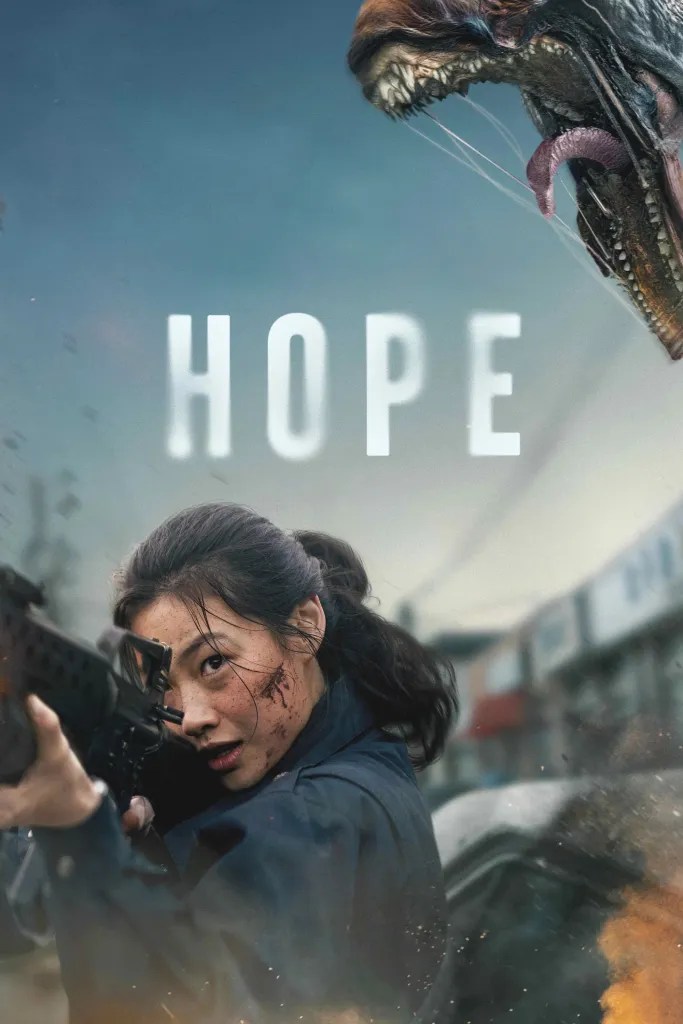
Na Hong-Jin | Hope | Plus M Entertainment | September 2026 | 156 minutes
At some point in the 2010s, the action blockbuster market started to shift. Not to say that there are no franchises or arthouse films that can present the setting of the action genre with a grand display, but the practices and hype of such a genre have certainly fizzled out. The reasons why vary: the constant fatigue of overt set dressings that leaves other technicalities underdeveloped, crafting and developing such set-pieces requires more resources than ever, and the standards of what audiences can expect have evolved and deepened throughout the years, as streaming culture shows how easy it is for the action genre to be treated with lopsided interest. The risk of making a good-quality action film has only gotten higher and higher.
Na Hong-Jin – whose work in action-thrillers such as The Chaser and supernatural horror like The Wailing has earned him acclaim within and outside of South Korean cinema, is willing to test the limits with his recent outing – Hope. The film treats the action genre in its most fanciful way, engulfing itself aflame across the two hour and 36 minute runtime.
The premise of quickly unfolds as it begins: within the small village of Hope Harbor, police chief Ko Bum-seok and his second cousin Ko Sung-Ki investigate what caused the grisly death of farm animals strewn across the village. That simple plot point instantly unfolds as Ko Bum-seok – alongside the rest of the police force and villagers of Hope Harbor – encounters the mysterious humanoid creatures that are stationed within the area. What erupts is a simple tale of man vs. beast.
Na Hong-jin navigates a tale as familiar as old action flicks of yore by letting the action speak first and foremost. Just as Ko Bum-seok walks across the ruined parts of Hope Harbor, medium-to-wide tracking shots are established as the main course for the entire film, essentially becoming the cinematic building blocks towards the action sequences that are sewn with urgency and tenacity. The film hammers out an exhilarating adrenaline rush of choreographed tension that keeps on moving, seldom stepping on the brakes, especially during the extensive, intense scenes that linger for a long time.
What gives this film its charm is how it carries the epic setpieces with gut-busting fun. The cast ensemble, including Hwang Jung-min, Zo In-sung, Ho-Yeon, Eum Moon-suk, and Im Hyun-sik, is entertaining to watch, playing the officers and villagers who tiptoe between the lines of foolish and cool. Characters drop excess profanity on one hand, then focus on shooting the creatures they encounter on the other. The usual tropes within the Hollywood sci-fi and action genres are treated with earnestness rather than disdain, from ballistic vehicle chases, unknown aliens taking shelter on Earth, and main characters that impossibly endure heavy hits. The film embraces such well-worn quirks, which end up ridiculous and badass.
Additionally, the monsters themselves are quite impressive to witness. Their CGI rendering is indeed reminiscent towards 2000s B-movie action CGI, but this works for two reasons: their rubbery physicality allows their frantic – and at times, silly – motion to actually become frightening, and there is impressive work done in letting them move within the cinematic depth of field. The first car chase scene is a perfect example, as the car keeps turning around to finally end Va’migere; it is jaw-dropping how the rendering and motion remain constant amidst the sweeping camera shots being used.
Despite its overwhelming flash, there remains a question of how much its built-up story would stick the landing, as there is a sequel story being set up in certain segments of the film. It’s clear that Hope is a fragment waiting to be completed, and with that kind of story set-up, it becomes a risk as to where the overall story does lead down the line.
But for what it is right now, Hope is stunning. It embraces all of the riveting flash that makes an action film so attention-grabbing, but it also genuinely cherishes its humor and its archetypes that add a layer of endearment to the tropes of action and sci-fi tends to indulge a lot. If this is the starting point, then there’s hope that the follow-through ends up being as ecstatic as this film.
Louis Pelingen (He/They) is a writer from the Philippines. Currently a staff editor at the Filipino music publication, The Flying Lugaw. His criticism work is also found at The Line of Best Fit, Treble, Northern Transmissions, Merry-Go-Round Magazine, Post-Trash, and Listencorp. Spends most of his time engrossed in the arts, alongside curiously surfing on the interwebs.
Leave a Reply